
The Devil Tarot Card
The card of bondage, temptation, and the chains we choose
Overview
The Devil arrives not as a monster from the underworld but as a mirror — reflecting the chains we have wrapped around ourselves. As card number 15 in the Major Arcana, this card represents bondage, addiction, and the shadow aspects of human nature. Yet its most important teaching is often overlooked: the figures on the card wear loose chains. They could walk away at any moment. The bondage is chosen, and therefore it can be unchosen.
When The Devil appears in your reading, the universe is asking you to look honestly at what binds you. This may be a literal addiction — to substances, screens, or behaviors — or something subtler: an unhealthy relationship, a belief that limits you, or a pattern of self-sabotage that you've mistaken for comfort. The Devil does not judge; it illuminates. Once you see the chains clearly, you hold the key to remove them.
The Devil is also the card of the shadow self — the parts of ourselves we've hidden, denied, or projected onto others. In Jungian terms, it represents the aspects of our psyche we've deemed unacceptable. The card invites integration rather than repression. What we resist persists; what we acknowledge we can transform. The Devil, paradoxically, is a card of liberation — but only for those willing to face what it reveals.
Card Symbolism
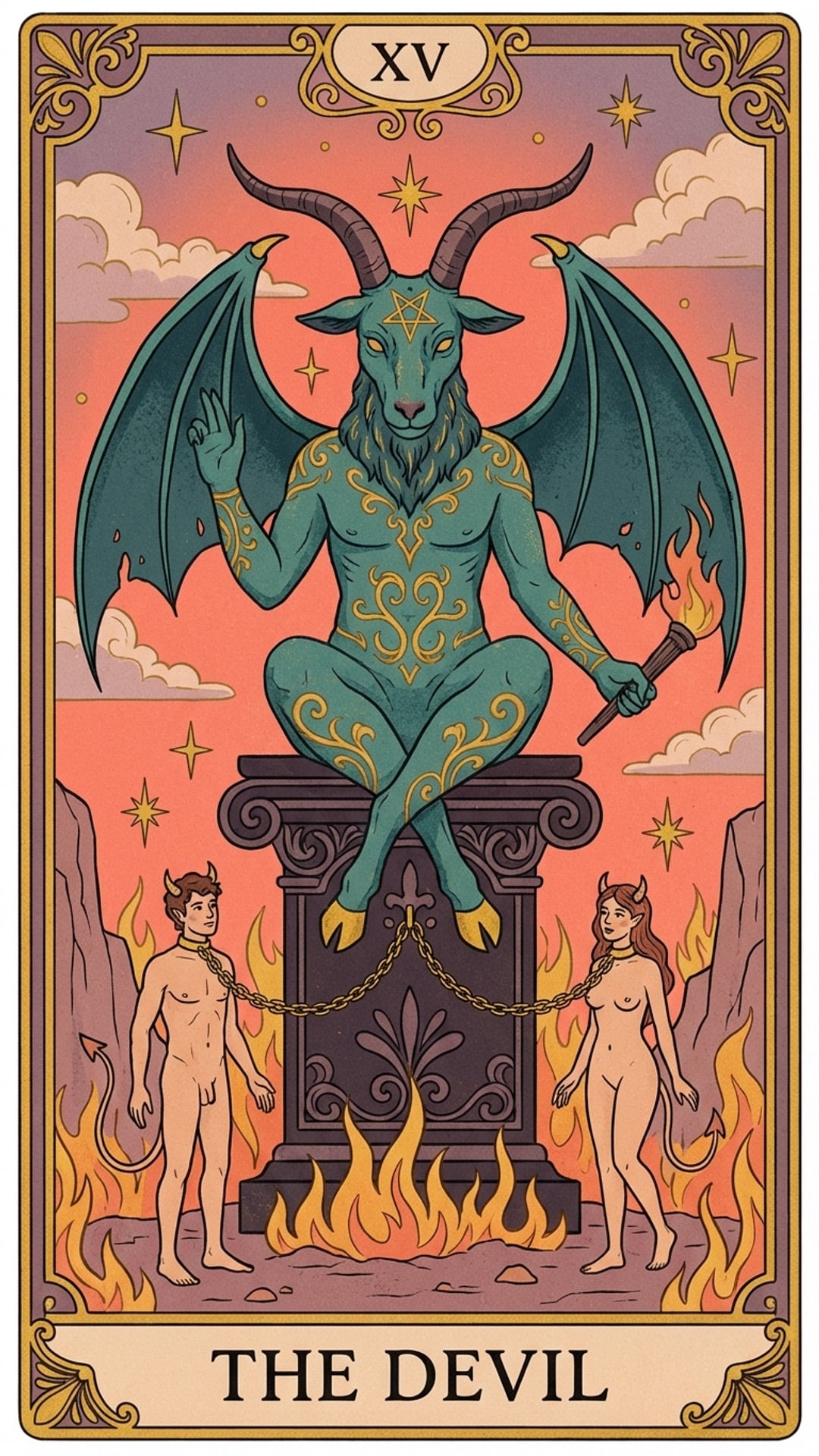
The Devil figure on the card is often depicted as a horned, goat-like being — a symbol that predates Christianity and connects to pagan imagery of fertility, nature, and the untamed aspects of existence. The inverted pentagram sometimes shown above the figure represents spirit submerged in matter — the prioritization of material over spiritual, which leads to bondage when taken to excess.
The two figures chained at the Devil's feet are crucial. They appear submissive, yet their chains are loose enough to slip off. This symbolizes that our limitations are often self-imposed. We stay in toxic situations because we believe we cannot leave; we continue harmful patterns because we've convinced ourselves we need them. The Devil holds up a torch — illumination — suggesting that awareness itself is the first step toward freedom.
The bat wings, the barren landscape, and the darkness of the card create an atmosphere of confinement. Yet the presence of the figures implies choice. They are not alone; they have each other. The bondage may feel comfortable, familiar — which is why it persists. The card asks: what would it cost to step out of the chains? And what would it cost to stay?
Upright Meaning
When The Devil appears upright, the message is one of honest reckoning. Something in your life has become a chain — a relationship, a habit, a belief, or a situation that limits your freedom and dims your light. The card does not necessarily mean you must leave immediately; it means you must see clearly. Denial is the Devil's greatest ally. Awareness is your first act of rebellion.
This card often appears when we're in the grip of something we know is harmful but feel powerless to change. The Devil reminds you that the power was always yours. The chains are loose. What would it take to slip them? Sometimes the answer is support, therapy, or community. Sometimes it is simply the decision to stop pretending that the bondage is freedom.
In practical terms, The Devil can indicate toxic work environments, financial dependence on unhealthy sources, or patterns of behavior that keep you stuck. It may also point to the shadow side of desire — when wanting becomes obsession, and pursuit becomes compulsion. The card asks you to distinguish between healthy desire and addictive attachment.
Reversed Meaning
The Devil reversed brings the energy of breaking free. Where the upright card shows bondage, the reversal suggests that you are becoming aware of your chains and taking steps to remove them. This can be a hopeful card — the beginning of recovery, the decision to leave a toxic situation, or the moment when you stop identifying with your limitations.
Alternatively, The Devil reversed can indicate that you're in denial about your bondage. You may believe you've broken free when you've only swapped one chain for another, or you may be refusing to see the ways you're still bound. The reversal can also suggest that the shadow is emerging more forcefully — what was repressed is now demanding attention. Integration, not suppression, is the path forward.
Another layer: The Devil reversed can point to liberation that feels destabilizing. Breaking free from addiction, ending a codependent relationship, or releasing a long-held belief can leave you feeling untethered. The card acknowledges that freedom, while ultimately healing, can be disorienting at first. Be gentle with yourself as you adjust to the weight of the chains lifting.
Love & Relationships
In matters of the heart, The Devil often signals unhealthy dynamics. Upright, it can indicate codependency — a relationship where both partners feel they cannot survive without the other, even when the connection is damaging. It may point to relationships built on obsession, jealousy, or the thrill of drama rather than genuine intimacy.
For singles, The Devil warns against pursuing connections that feel intoxicating but ultimately diminish you. You may be attracted to people who replicate old wounds, or you may be using romance as a way to avoid facing yourself. The card asks: are you seeking love or escape? True partnership should expand you, not confine you.
For those in partnerships, The Devil invites honest assessment. Are you staying out of love or out of fear? Is the relationship a source of growth or a comfortable prison? The card does not always mean leave — but it does mean see. Sometimes recognizing the dynamic is enough to begin changing it. Sometimes the recognition itself becomes the key that unlocks the chain.
Career & Finances
The Devil in career readings can indicate work that feels like a trap. You may be in a job you dislike but stay for the paycheck, the status, or the fear of change. The card can also point to unhealthy ambition — the kind that sacrifices wellbeing, relationships, or integrity for success. Ask yourself: who benefits from your labor, and at what cost to you?
Financially, The Devil often signals debt, overspending, or financial dependence on unhealthy sources. It may indicate that money has become a master rather than a tool — that you're working to sustain a lifestyle that doesn't sustain you. The card can also point to get-rich-quick thinking, gambling, or financial decisions driven by fear or addiction rather than clarity.
If you've been feeling stuck in your career or finances, The Devil suggests that the stuckness may be self-imposed. What beliefs about money, success, or capability are keeping you in place? Question them. The chains may be looser than you think.
Advice
The Devil's core advice is to see your chains. Before you can break free, you must acknowledge what binds you. This requires radical honesty — with yourself, and ideally with someone you trust. Denial is the Devil's favorite hiding place. Shine a light there.
Recognize that bondage often feels like safety. The familiar, even when painful, can seem preferable to the unknown. The Devil asks you to question that equation. What would freedom actually feel like? What would you do, be, or create if you were not bound? Allow yourself to imagine it. Imagination is the first step toward liberation.
Finally, remember that the chains are loose. You are not a victim of external forces; you are a participant in your own confinement. That participation can be withdrawn. Support is available — therapy, community, spiritual practice. You do not have to break free alone. But the decision to begin? That power has always been yours.
Yes or No
The Devil is typically a No. This card suggests that the situation in question involves bondage, temptation, or outcomes that would limit rather than liberate you. If you're asking about pursuing something you know is harmful, The Devil is a clear warning to reconsider.
However, if your question is about breaking free, facing your shadow, or doing the work of liberation, The Devil reversed can be interpreted as a Yes. The universe supports your efforts to recognize and release what binds you. For questions about indulgence, excess, or staying in toxic situations, the answer remains no. Choose freedom.
Frequently Asked Questions About The Devil
What does The Devil tarot card mean in a reading?
The Devil represents bondage, addiction, and the shadow aspects of human experience. When this card appears, it does not signify an external evil force but rather the chains we have chosen — often unconsciously — through our attachments, habits, and fears. The figures on the card are bound by loose chains they could remove at any moment, symbolizing that our limitations are often self-imposed. The Devil invites us to recognize our patterns, face our shadows, and reclaim the power we have given away to substances, people, or beliefs that keep us small.
Is The Devil a yes or no card?
The Devil is typically a No in yes-or-no readings. This card suggests that the situation in question may involve unhealthy attachments, temptation, or outcomes that would bind you rather than free you. If you're asking about pursuing a desire that you know is harmful — whether a toxic relationship, addictive behavior, or a choice driven by fear — The Devil is a clear warning. However, if your question is about facing your shadow, breaking free from bondage, or doing shadow work, The Devil reversed can indicate a yes — the beginning of liberation.
What does The Devil mean in love readings?
The Devil in love readings often points to toxic dynamics, codependency, or relationships built on obsession rather than genuine connection. You may be staying in a partnership out of fear, addiction to drama, or the belief that you cannot survive without this person. The card can also indicate intense physical attraction that overrides emotional compatibility, or a relationship that feels like a trap even when it looks like love from the outside. The Devil asks you to honestly assess whether your bonds are chosen from love or from fear — and whether you have the power to leave if you choose to.
What zodiac sign is associated with The Devil?
The Devil is traditionally linked to Capricorn and the element of Earth. Capricorn's association with ambition, structure, and the material world connects to The Devil's themes of earthly attachment and the ways we chain ourselves to status, security, or success. The card's imagery of the goat — Capricorn's symbol — reinforces this link. The Devil represents the shadow side of Capricorn: when ambition becomes obsession, when responsibility becomes martyrdom, and when the need for control becomes a prison. Understanding this connection helps us see The Devil as the shadow of our highest aspirations, not an external evil.
Where does The Devil fit in the Major Arcana sequence?
The Devil is card number 15 in the Major Arcana, positioned between Temperance (14) and The Tower (16). In the Fool's Journey, this card represents the moment when the seeker confronts their shadow — the parts of themselves they have repressed or projected onto others. After Temperance's balance, The Devil shows what happens when we lose that equilibrium and fall into excess. Before The Tower's dramatic collapse, The Devil represents the unsustainable structures we build on fear and attachment. It is a necessary confrontation: we must see our chains before we can break them, and The Tower will do that breaking if we do not choose to do it ourselves.